
七十二家房客
Chinese scientists develop electrode coating to address signal loss and tissue adhesion problems in long-term brain-computer interface implantation_我的网站

一 |
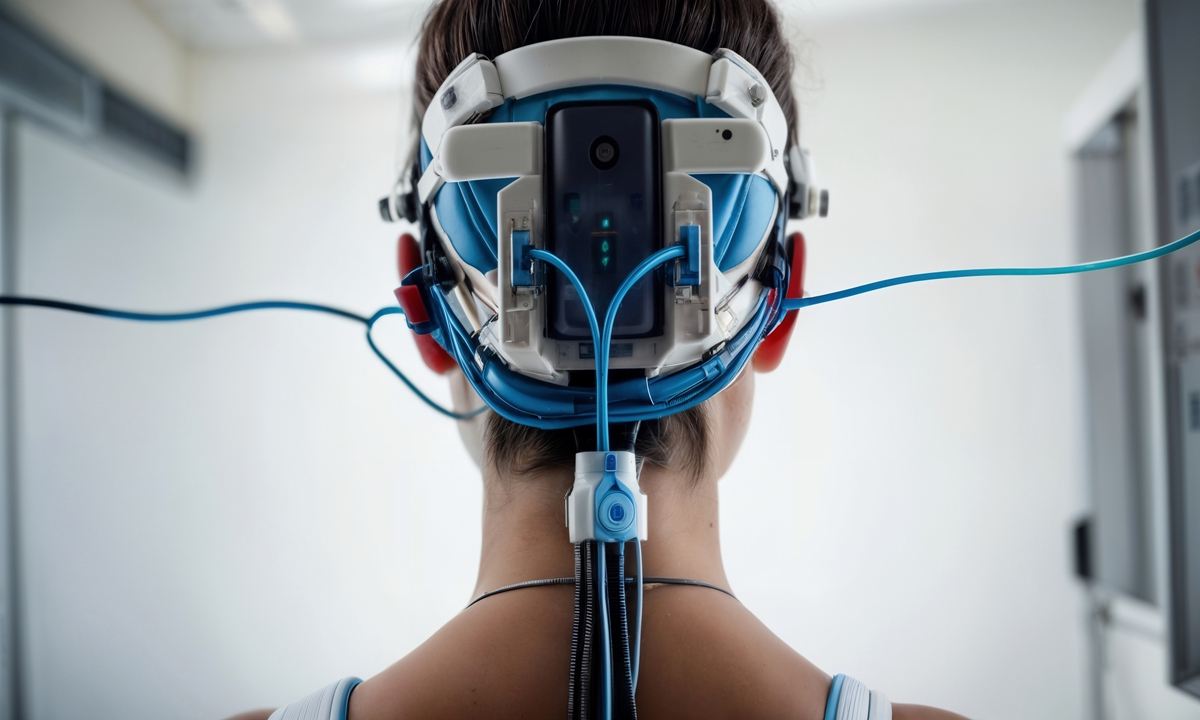
Chinese researchers have developed a multifunctional electrode coating that addresses key challenges in long-term brain-computer interface (BCI) implantation, including signal loss and tissue adhesion, bringing BCI one step closer to clinical application, the Global Times learned from the research team behind the findings on Sunday.
As an emerging field combining neuroscience and artificial intelligence (AI), BCI faces a major challenge of ensuring long-term compatibility between electrodes and brain tissue. Previous clinical trials showed that immune responses could cause implanted electrodes to retract after just three months, severely reducing signal quality and the number of available channels.
This problem stems from chronic inflammation triggered by implants, which creates insulating scar tissue around electrodes and separates them from neurons. Irreversible adhesion between electrodes and brain tissue after long-term implantation also makes device removal risky, potentially causing brain injury during follow-up surgeries.
Experiments showed that flexible neural electrodes coated with this material could operate stably in the brain for more than 300 days and could be safely removed without causing damage. This means the universal coating technology can make electrodes not only operate stably over the long term but can also be safely removed and replaced after aging, paving the way for long-term BCI applications.
Developed by the research team led by Zhang Wei at the Technical Institute of Physics and Chemistry, Chinese Academy of Sciences, associated with Beijing Tiantan Hospital, Shanghai Institute of Microsystem and Information Technology and NeuroXess, a high-tech life science company specializing in BCI technologies, the cationic alternating peptide electrode coating preserves electrode flexibility and conductivity, while offering antibacterial, anti-protein adsorption and immune-rejection-inhibiting functions.
A 300-day animal study showed the coating's effectiveness. Bare electrodes experienced a sharp loss of recording capability after 90 days of implantation and could barely detect neuronal signals after 300 days. In contrast, coated electrodes maintained stable recording channels and consistently captured neural signals above 155 microvolts.
In terms of neural modulation, after 300 days of implantation, conventional electrodes required a current of 100 microamps to induce weak limb responses, while coated electrodes triggered clear movements with only 2 microamps, improving modulation efficiency by 50 times.
Notably, the removal tests highlighted a key advantage of the coating that electrodes no longer form irreversible bonds with brain tissue. In the experiments, the coated electrodes were removed intact, with minimal damage to the surrounding brain tissue, Zhang told the Global Times on Sunday.
。

二 | 第48届世界技能大赛将于9月22日至27日在上海举行,目前,中国代表团已正式成立。当前,人工智能技术加速赋能千行百业,对劳动者技能提出全新要求。

三 | 本届世赛新增7个相关项目,以赛事引领技能人才培养方向,拓宽技能人才职业边界。 本届世赛紧贴产业发展需求,新增无人机系统、数字交互媒体设计、轨道车辆技术、智慧安防技术、软件测试、口腔修复工艺技术、零售7个比赛项目,世界技能大赛不再只比拼传统手艺,赛项持续向数字、智能赛道迭代,考察选手驾驭新技术、善用AI工具解决真实岗位难题的能力。而这些世赛标准正加速向教学标准、培训标准转化,为国内技能人才培养提供国际参照。 世界技能组织首席执行官 大卫·霍伊:大赛不仅关乎赛场内的选手,我们希望,每一位参观者都能受到触动和鼓舞,至少能够认识到技能的价值;也许对一些人来说,大赛还会点燃梦想,让他们看到未来想要从事的事业。 倒计时一个月 八项技能提前体验 第48届世界技能大赛迎来开赛倒计时一个月,赛事组织、场馆运行、技术保障、服务接待、参赛备战等各项工作进入最后冲刺阶段。赛场之外,办赛氛围日渐浓厚,各类技能体验正逐步走近普通大众。

四 | 在上海世界技能博物馆,围绕世界技能大赛新推出的“微赛场”项目,吸引了不少市民。智慧安防技术是本届世赛新增设的一个项目,在体验区,小朋友正通过模拟操作,了解智慧安防在日常生活中的作用。 上海电子信息职业技术学院教师 熊磊:这个智慧安防项目,包括人工智能方面设备的安装、调试以及编程,主要是为了体现人工智能在安防当中的应用。

五 | 记者看到,从信息通信技术到无人机障碍飞行,从中式面塑到油漆与装饰,各类体验项目既有面向未来产业的新技能,也有贴近日常生活的传统技艺。 世界技能博物馆副馆长 潘煜:能够把一些比较专业的赛事,进行一些趣味化生活化的改编,打造人人能体验的项目。 (总台央视记者 李欣 闫素 李红刚 杨静 一城)。
Current article:http://b6swp4.feizengbubaipeirangnalouchuo.sbs/news/20260826_6550643.html
Published on:10:05:56
我的网站最近更新
- 地质灾害橙色预警:福建东部和南部局地发生灾害风险高
- 《繁花》维权事件,浮华背后是封建与腐朽
- 推特否认裁员传闻 称临近收购会有大量谣言
- 一夜勇士三大消息:一年260万!一年390万!二当家有望提前复出!
- 沪电股份:上半年净利润29.23亿元,同比增长73.72%
- 乌克兰独立日收到71亿大礼包,欧盟力挺乌克兰,防空导弹弹药管够,止戈军是我,原创 乌克兰独立日收到71亿大礼包,欧盟力挺乌克兰,防空导弹弹药管够
- 《GTA6》泄露哥“大葱哥”Cyberleek被做进《给他爱5》:还能变身瞬移大战警察
- 官方:因罗马教皇方济各去世,今天的意甲联赛推迟进行
- 小米6.35亿北京再拿地 拟用于建设新能源汽车工厂
- 体彩上饶分中心开展安心守护进社区主题活动
- 商汤科技:上半年首次录得IFRS净利润6.17亿元,为上市以来首次录得盈利
- 吉祥航空:公司实际控制人王均金与王瀚续签了《一致行动协议》
- 神州G8光超笔记本预售:17.3英寸/RTX 206094999元
- 长城观察丨“雄安造”卫星咋这么快就上天?
- 豫光金铅:上半年归母净利润5.45亿元,同比增长12.46%
- Windows 95 为何塞进音乐、动画和游戏?微软说全是因为“好玩”
- 《铁拳8》制作人:范马勇次郎不会输 输了是你玩的菜
- Provinces push paid leave to spur consumption
- 为了“西湖牌”莲蓬、荷叶 高三女生凌晨4点多赶到西湖
- 在小红书个人卖平台买S925银吸铁石可吸平台拒处理还包庇
- 美国加征中国电动车关税!外交部回应
- 创纪录罚单!欧盟重罚阿里巴巴6.3亿美元,直指假货与安全漏洞
- “内鬼”申勇,任上被查
- 网传《爱情公寓》回归!核心演员却缺席 是卖情怀吗
我的网站热门资讯
- 【园所动态】蛇年绘新篇 童心扬帆航——幼幼凯旋城幼儿园2025年春季开学典礼活动
- AMD RYZEN 3000处理器设计独特:或者有12/16核版本
- NBA休赛期15大自由球员纷纷找到了下家
- 美国航天局拟最早于9月27日再次尝试发射新一代登月火箭
- 2019年三星手机屏幕指纹爆炸
- 波东巴西组屋单位外出现焦尸
- 陕西水上乐园滑梯厂家怎么选?实地考察经验与避坑指南
- “食”刻守护 健康“童”行——前进小步幼儿园开展食品安全周系列活动
- 乐福追忆16年夺冠骑士:铸就了独一份的兄弟情谊
- 大模型上岗 唐钢加速“智”变
- 选举观察:赖清德暗令检调介入选举,柯文哲最讨厌检察官重出江湖
- 合理膳食,保持健康体重
- CDN加速配置教程:Cloudflare和国内CDN对比
- 9月1日卸任!苹果CEO库克重申不会为是同性恋而懊恼
- 2026大理旅拍攻略 第一次拍婚纱照怎么选不踩坑
- 签了!比尔2年1320万!好家伙,头真铁啊.....
- 谁还记得他?四年前击杀阿根廷的沙特英雄,本届世界杯却引发争议
- क्या आप भी रोजाना लगाती हैं लिपस्टिक? तो जान लें इसके 5 बड़े नुकसान, वरना बाद में होगा पछतावा
- Akhanda 2: Balakrishna Shines in Three Avatars in The Film
- “眼见为实”有回响,“眼见为实”有回响
- 浙江省防指将防台风应急响应提升至Ⅰ级
- 台风“简拉维”减弱为热带低压,或于今天白天在福建近海减弱消散,浙江、福建、广东、江西、湖南、湖北、海南、台湾等有大到暴雨
- 这次警卫也救不了他,尹锡悦被成功揪出总统府,但李在明还没稳赢
- 首条跨京冀城市轨道交通线路开启空载试运行,首条跨京冀城市轨道交通线路开启空载试运行